
Have you ever noticed that you automatically reach for certain colours?
Maybe your wardrobe is 70% black.
Maybe you can’t stop buying blue shirts.
Maybe every time you shop for something new, you somehow end up with another white or cream shirt.
It’s probably not random.
The colours we wear can influence how an outfit feels—and they can influence how other people perceive our style.
That doesn’t mean wearing a red shirt suddenly makes you “confident” or wearing black makes you “mysterious.”
People are more complicated than that.
But colour can communicate mood, personality, occasion and even the kind of visual impression you’re trying to create.
So let’s explore what some of the most popular shirt colours can say about your style.
Black: Confident, Minimal and Effortless
Black is one of the easiest colours to build an outfit around.
It doesn’t demand attention, but it rarely looks boring.
A black shirt can feel:
- Confident
- Minimal
- Modern
- Sophisticated
- Slightly edgy

That’s one reason black works so well in streetwear.
Try:
Black oversized T-shirt + black cargo pants + sneakers
for a strong urban look.
Or:
Black printed shirt + dark jeans
for something more casual and expressive.
Black is also incredibly forgiving when you’re unsure about colour combinations.
White: Clean and Timeless
White gives an outfit a completely different energy.
It feels:
- Fresh
- Clean
- Minimal
- Simple
- Versatile
A white printed shirt can make a colourful pattern feel more balanced.
A plain white oversized T-shirt can become the foundation for almost any outfit.
Pair it with:
- Blue denim
- Black cargos
- Beige trousers
- Olive pants
- Shorts
It’s difficult to go wrong.
The downside?
White requires more maintenance.
Stains don’t exactly negotiate.
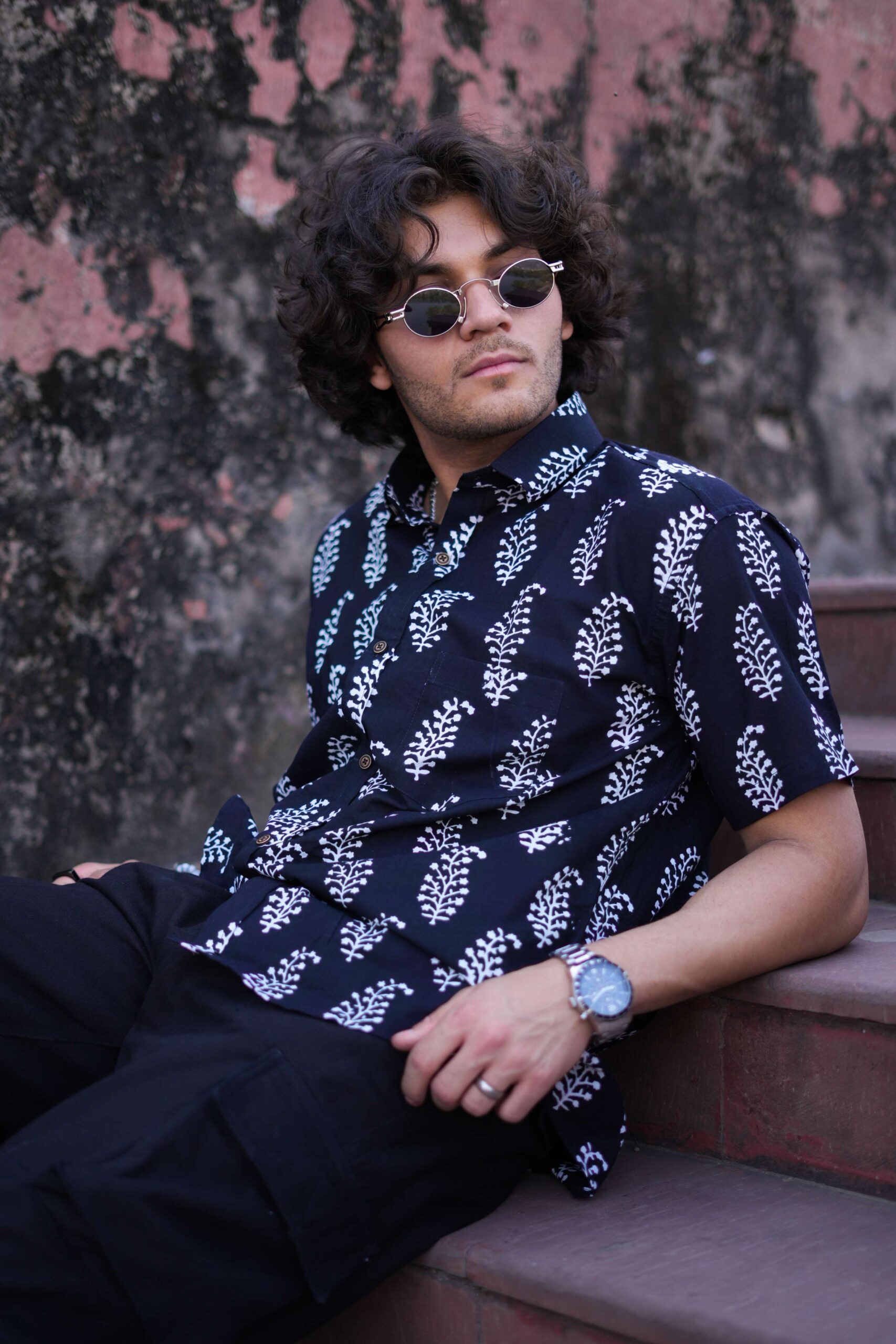
Blue: Relaxed and Approachable
Blue is one of the easiest colours for everyday wear.
It can feel relaxed without becoming too casual.
A light blue shirt can create a fresh daytime look.
A navy shirt feels more mature and polished.
A printed blue shirt can sit somewhere between the two.
Try a blue printed shirt with:
White trousers + sneakers
for a summer look.
Or:
Blue printed shirt + dark denim
for evening plans.
Blue is a particularly useful colour if you want something more interesting than white but less dramatic than red.
Red: Energy and Confidence
Red naturally attracts attention.
That’s why a red shirt can instantly become the centre of an outfit.
You don’t necessarily need loud styling around it.
In fact, you probably shouldn’t.
Try:
Red printed shirt + black jeans + simple sneakers
Let the shirt do the work.
If you’re wearing a particularly bold red print, keep the rest of the outfit neutral.
The goal isn’t to compete with your own shirt.
Green: Relaxed and Earthy
Green has become increasingly useful in modern casual wardrobes.
Think:
- Olive
- Sage
- Forest green
- Khaki
These colours work particularly well with utility-inspired fashion.
For example:
Olive oversized tee + beige cargo pants
or
Sage shirt + cream trousers
Green also works beautifully with brown, beige and off-white.

Yellow: Playful and Optimistic
Yellow isn’t for everyone.
And that’s exactly why it can be fun.
A mustard or muted yellow shirt is easier to style than an extremely bright yellow one.
Try it with:
- Black
- Navy
- Cream
- Dark denim
A mustard printed shirt can also become a great statement piece.
If you’re experimenting with brighter colours for the first time, start with a slightly muted shade.
Beige and Cream: Quiet Confidence
Neutral shades have become increasingly popular because they make outfits look considered without feeling overstyled.
Cream and beige can create a premium, understated appearance.
Try:
Cream shirt + beige trousers + white sneakers
Or:
Beige oversized tee + olive cargos
These colours are particularly useful if you like minimal fashion.
Pink: More Versatile Than You Think
Pink isn’t just one colour.
There’s:
- Dusty pink
- Pastel pink
- Salmon
- Rose
- Hot pink
A soft pink shirt can create a relaxed summer look.
A darker or brighter pink becomes more expressive.
Pair softer pinks with:
- White
- Beige
- Light blue
- Grey
If you’ve never worn pink before, start with a muted shade.
Does Shirt Colour Really Change How People See You?
To an extent, colour contributes to the visual impression of an outfit.
But context matters.
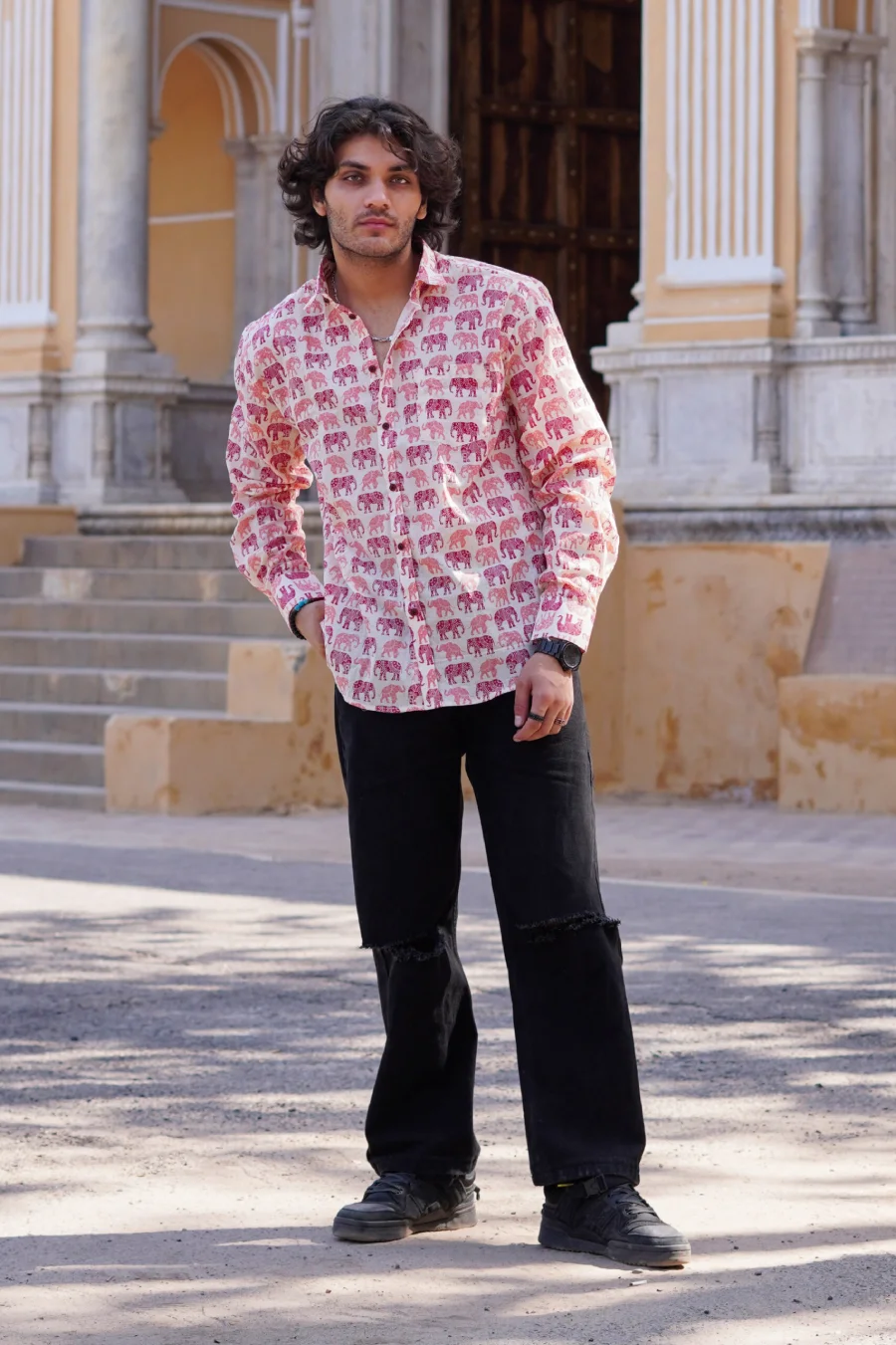
A red printed shirt at a music festival sends a completely different message from a red shirt at a formal workplace.
Your:
- Fit
- Body language
- Grooming
- Accessories
- Occasion
- Overall outfit
all influence the final impression.
So don’t treat colour psychology as a personality test.
Use it as a styling tool.
What Colours Work Best Together?
Here are some easy combinations.
Black Shirt
Pairs well with grey, white, beige and denim.
White Shirt
Pairs easily with almost anything, making it one of the most versatile wardrobe colours.
Blue Shirt
Works well with white, beige, navy and denim.
Red Shirt
Looks great with black, white and dark denim.
Green Shirt
Pairs nicely with beige, cream and black.
Yellow Shirt
Works best with black, navy and cream.
Pink Shirt
Pairs well with white, grey and beige.
Beige Shirt
Looks good with brown, white, olive and black.
Match Your Colour to the Occasion
College
Experiment.
Graphic tees, brighter colours and prints can work well.
Office Casual
Stick with calmer colours such as:
- Navy
- White
- Light blue
- Beige
- Olive
Date Night
Darker colours or a controlled statement colour can work well.
Weekend
This is your chance to experiment.
Printed shirts and brighter colours can add personality.
Summer
Lighter colours can create a fresh appearance and pair easily with lightweight trousers.
What If You Only Wear Black?
That’s completely fine.
You don’t need to become a rainbow overnight.
If black dominates your wardrobe, introduce colour gradually.
Start with:
Black → Charcoal → Olive → Beige → Cream
These shades are easy to combine with black.
Once you’re comfortable, experiment with blue or muted red.
What If You Love Bright Colours?
Go for it.
Just understand balance.
If the shirt is loud, keep the bottoms simple.
Bold shirt + neutral trousers
is one of the easiest styling formulas.
You don’t need colourful trousers, colourful shoes and colourful accessories all at once.
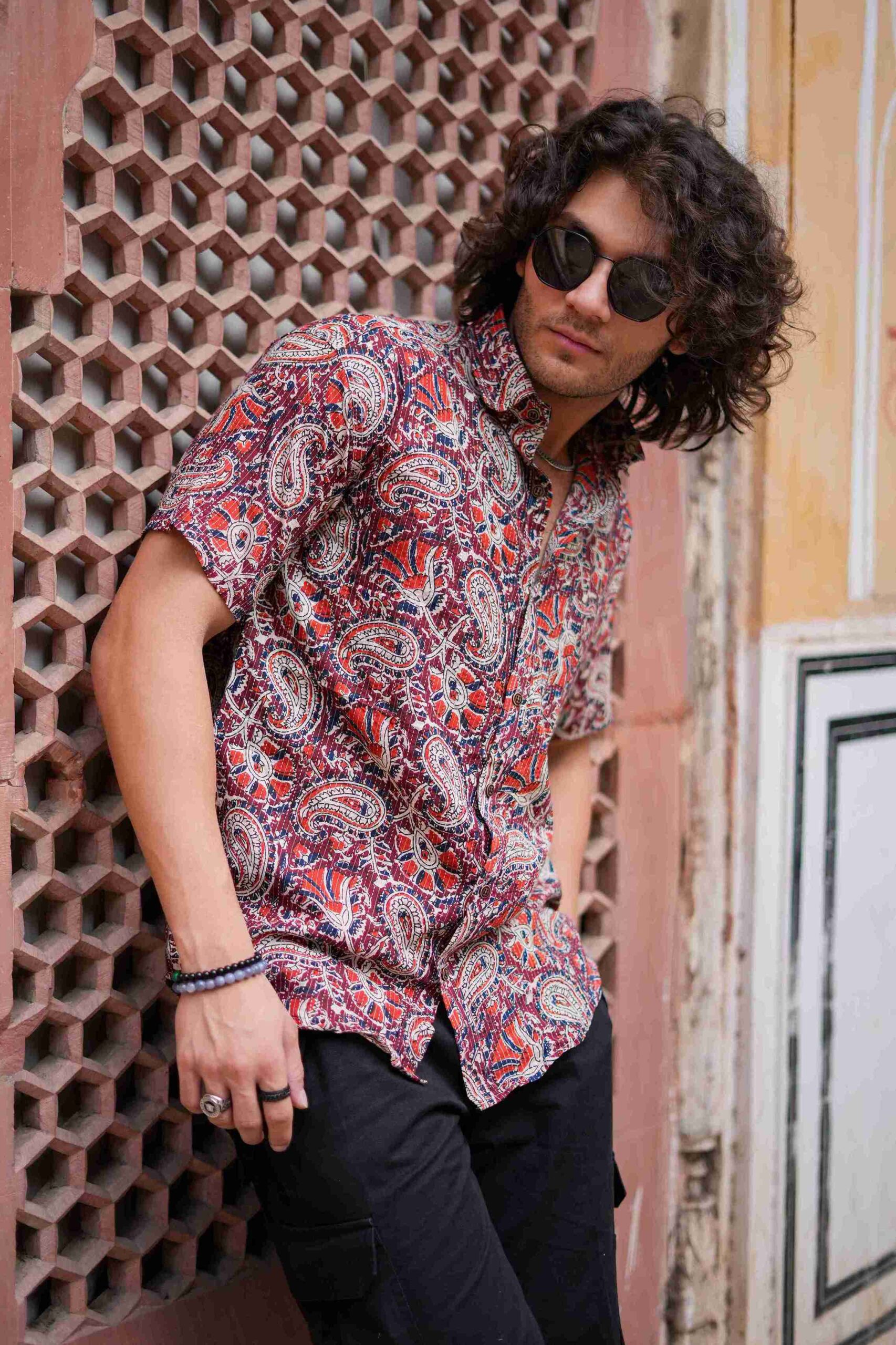
Use Colour to Build Your Personal Style
Your wardrobe doesn’t need every colour.
Pick a core palette.
For example:
Minimal: Black + white + grey + beige
Earthy: Olive + cream + brown + beige
Streetwear: Black + white + red + grey
Summer: White + blue + cream + pastel shades
Then add occasional statement pieces.
This makes shopping easier because you already know what will work with your existing clothes.
Final Thoughts
Colour psychology isn’t about putting yourself into a personality box.
It’s about understanding what your clothes communicate visually.
Black can feel minimal.
White can feel clean.
Blue can feel relaxed.
Red can bring energy.
Green can feel earthy.
Cream and beige can create understated sophistication.
But the most important colour rule is simple:
Wear colours you actually feel good wearing.
Confidence doesn’t come from following a colour chart.
It comes from feeling comfortable in your outfit.