
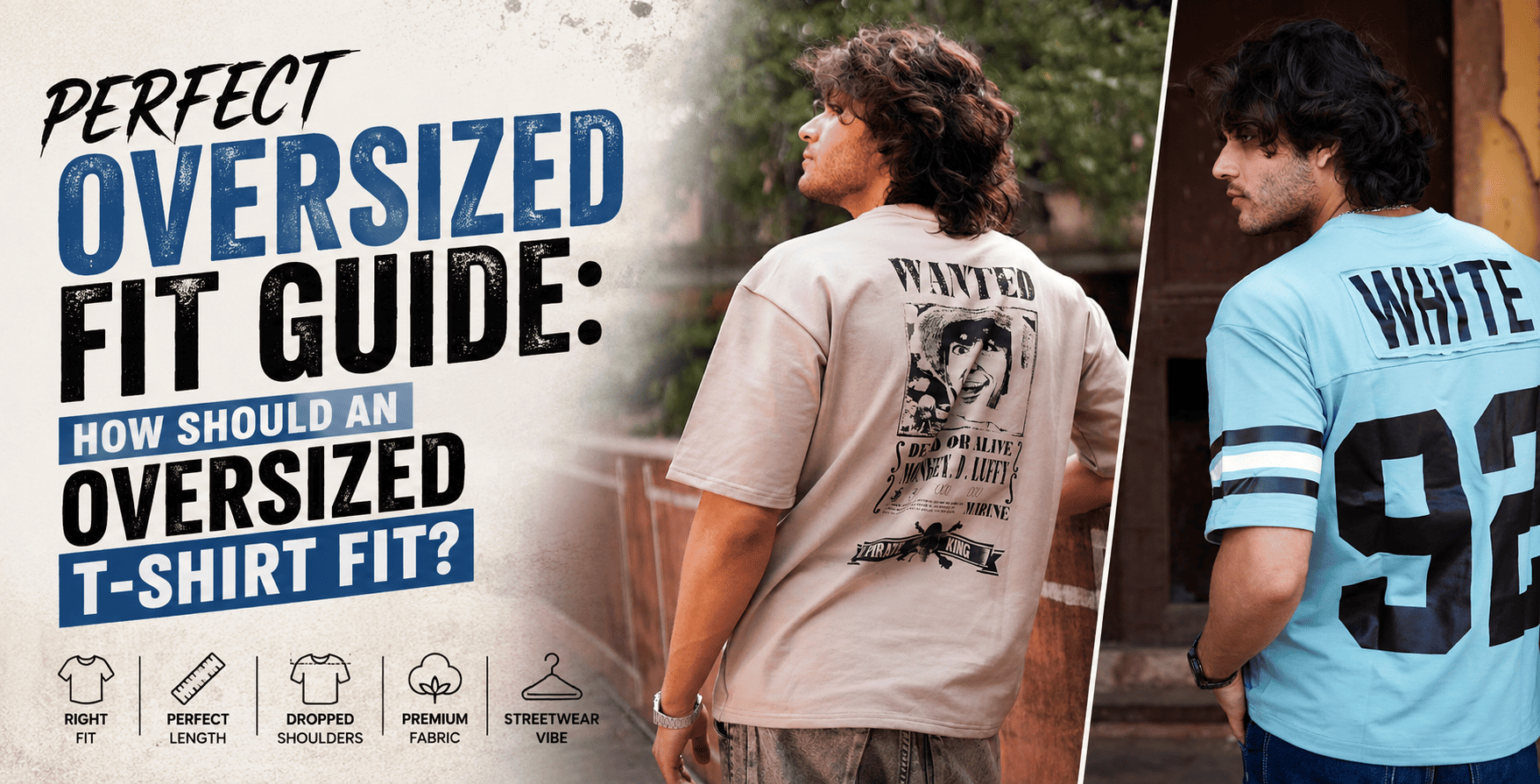
Here’s a situation almost every guy experimenting with oversized fashion eventually experiences.
You see someone wearing an oversized T-shirt that looks effortlessly cool.
You decide to try the same look.
You buy a T-shirt two sizes bigger.
You put it on…
And somehow you look less “streetwear” and more “borrowed my older brother’s T-shirt.”
What happened?
The problem is that oversized and oversized-looking aren’t necessarily the same thing.
A good oversized T-shirt isn’t simply a regular T-shirt made bigger. The silhouette is usually intentionally designed around elements such as the shoulders, chest, sleeves and length.
Once you understand those proportions, finding your ideal oversized fit becomes much easier.
Let’s break it down.
What Is an Oversized Fit?
An oversized fit is intentionally roomier than a standard regular-fit garment.
Depending on the design, an oversized T-shirt may feature:
- Dropped shoulders
- Wider sleeves
- Relaxed chest
- More room through the body
- A carefully considered length
The key word here is intentional.
A good oversized T-shirt should look relaxed without making you disappear inside it.
That’s why simply sizing up isn’t always the answer.
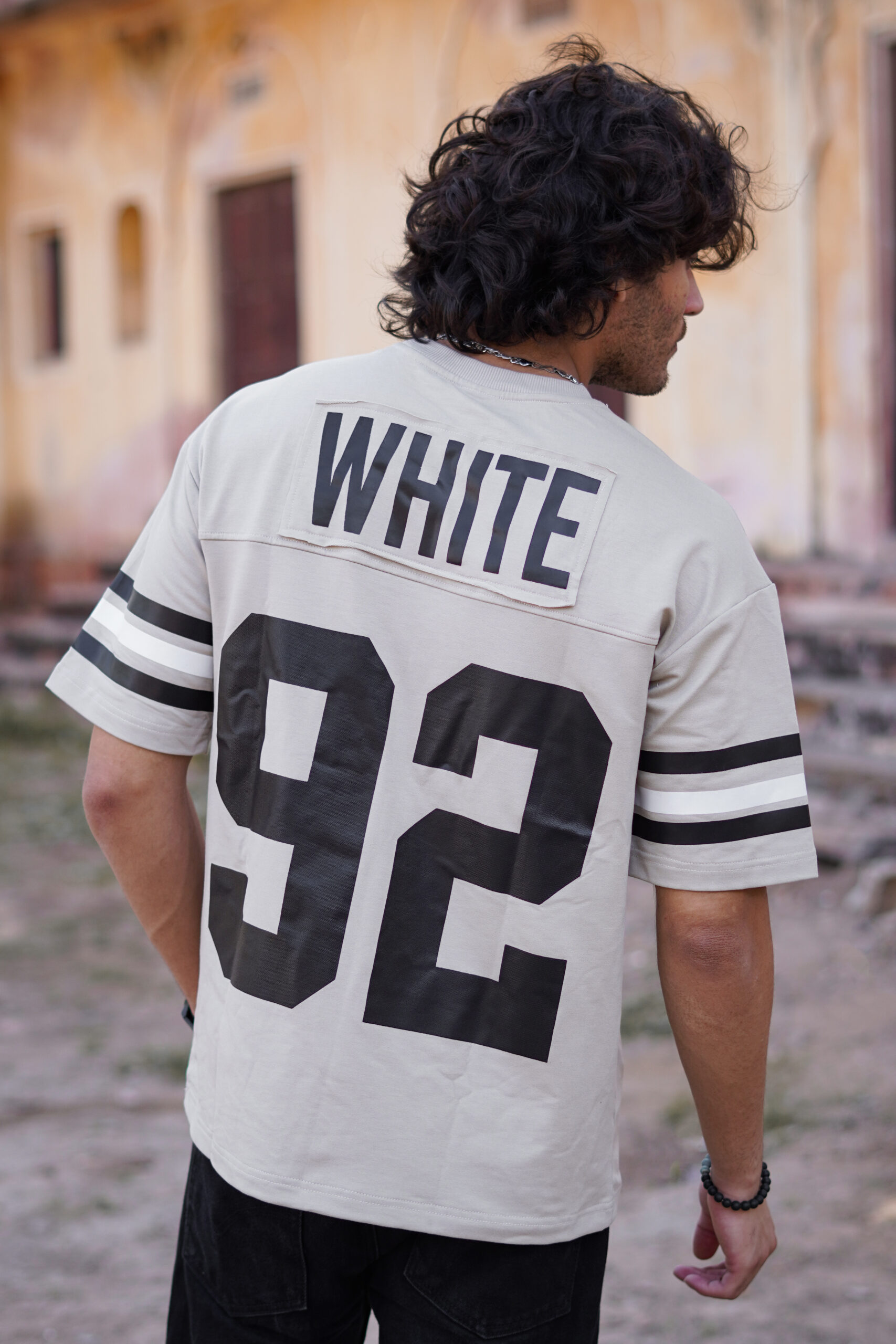
Oversized Fit vs Wearing a Bigger Size
Imagine you normally wear a medium regular-fit T-shirt.
If you buy the exact same design in XL, almost every measurement increases.
The chest gets wider.
But the length may also become much longer.
The neckline may sit differently.
The sleeves may fall awkwardly.
A purpose-built oversized T-shirt can adjust these proportions differently.
That’s what creates the modern oversized silhouette.
1. Start with the Shoulders
Shoulders are one of the easiest ways to recognise an oversized fit.
On a standard T-shirt, the shoulder seam generally sits around your natural shoulder.
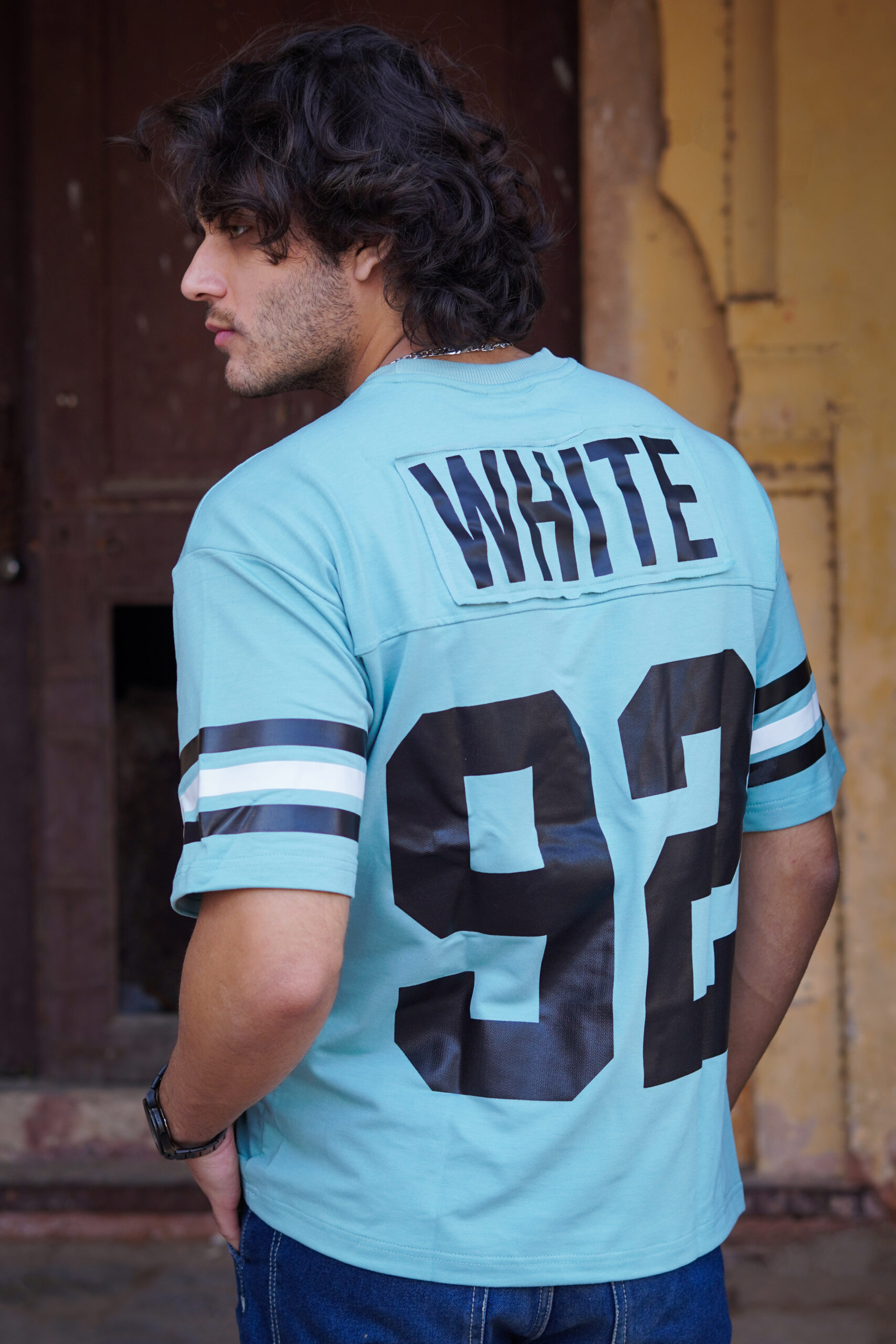
On many oversized T-shirts, you’ll see a dropped shoulder, meaning the seam sits further down the upper arm.
This creates the relaxed appearance associated with streetwear.
But there’s still a limit.
If the shoulder drops so far that the entire upper half looks shapeless, the size or cut may be too large for the look you want.
2. Check the Chest
An oversized tee should have room around your chest.
It shouldn’t cling tightly when you move.
At the same time, excessive fabric can make the garment balloon outward.
You want enough room to create a relaxed silhouette while still being able to see some overall shape.
When trying one on, move naturally.
Raise your arms.
Sit down.
Walk around.
Comfort should be part of the fit—not an afterthought.
3. Pay Attention to Sleeve Length
Sleeves have a huge effect on oversized styling.
Regular T-shirt sleeves often finish around the upper arm.
Oversized sleeves generally sit lower and may approach the elbow depending on the design.
That’s part of the look.
However, if the sleeves extend excessively far down your forearms, the T-shirt may simply be too big.
Again: relaxed, not accidental.
4. Length Is Where Many People Go Wrong
This is probably the most common oversized-fit mistake.
People focus on width and forget length.
An oversized T-shirt needs extra room, but if it’s extremely long, it can shorten the appearance of your legs and throw off the proportions of the outfit.
The ideal length varies according to your height, torso, fit preference and the specific design.
Rather than relying on a universal rule, compare the garment’s measurements with a T-shirt you already own and like.
That’s often much more reliable than guessing from S, M or L alone.
5. Look at the Overall Silhouette
Stand in front of a full-length mirror.
Don’t analyse the neckline for five minutes.
Look at the whole outfit.
Ask:
Does this look deliberately oversized?
or
Does it simply look too big?
A good oversized silhouette should feel relaxed, balanced and intentional.
That’s the goal.

Should You Size Up for an Oversized Look?
Not automatically.
If the T-shirt is already designed as oversized, start with the brand’s recommended size.
For example, if you normally wear M, an M in an intentionally oversized collection may already give you the intended relaxed silhouette.
Going up to L or XL could make it considerably looser.
Always check the size chart.
Better yet, compare actual garment measurements with something in your wardrobe.
How Fabric GSM Affects Oversized Fit
Fit isn’t determined by measurements alone.
Fabric matters too.
A very lightweight fabric can drape softly against the body.
A heavier fabric—such as 240 GSM cotton—can provide more structure.
This can be particularly useful in oversized fashion because a more substantial fabric can help the garment maintain its silhouette.
That doesn’t mean heavier is automatically better.
It simply creates a different look and feel.
If you like structured streetwear, fabric GSM is worth checking before you buy.
How Should Shorter Men Wear Oversized T-Shirts?
Yes, shorter guys can absolutely wear oversized clothing.
You don’t need to avoid the trend.
You just need to pay more attention to proportions.
Consider:
- Avoiding unnecessarily long tees
- Choosing an intentional oversized cut
- Pairing with straight or relaxed trousers
- Keeping trouser length clean
- Choosing footwear that complements the silhouette
An oversized T-shirt shouldn’t make your legs visually disappear.
What About Taller Men?
Taller men often have the opposite problem.
A T-shirt can have enough width but not enough length.
Check actual garment measurements instead of relying solely on the size label.
Look particularly at:
- Body length
- Sleeve length
- Chest width
Proportion matters regardless of height.

How to Style the Perfect Oversized Fit
Once you’ve found the right T-shirt, styling becomes much easier.
With Cargo Pants
The classic streetwear combination.
Oversized tee + cargos + sneakers
With Straight Jeans
Great if you want a more balanced silhouette.
With Baggy Denim
Perfect for a stronger Gen Z streetwear look.
With Relaxed Trousers
Ideal for cafés, dates and smart-casual outfits.
With Shorts
Useful in warmer weather—just make sure the T-shirt isn’t so long that your shorts disappear completely.
Regular Fit vs Oversized Fit
Feature
Regular Fit
- Shoulders: Near natural shoulder
- Chest: Closer to body
- Sleeves: Standard
- Silhouette: Traditional
- Style: Classic casual
- Movement: Standard
Oversized Fit
- Shoulders: Often dropped
- Chest: Relaxed
- Sleeves: Wider/longer
- Silhouette: Relaxed
- Style: Streetwear/modern
- Movement: Roomier
Neither fit is better.
They simply create different aesthetics.
How to Buy an Oversized T-Shirt Online
You can’t try it on, so measurements become your best friend.
Before ordering:
1. Check the Size Chart
Don’t assume every brand’s medium is identical.
2. Check the Model Information
If available, look at the model’s height and size worn.
3. Measure Your Favourite T-Shirt
Lay a T-shirt you already love flat and measure it.
Then compare those measurements with the product size chart.
4. Read the Product Description
Look for terms such as:
- Oversized fit
- Relaxed fit
- Dropped shoulder
- Heavyweight cotton
- 240 GSM
These clues help you understand what the garment is designed to do.
Common Oversized Fit Mistakes
Automatically Sizing Up
You may already be looking at an oversized garment.
Ignoring Your Height
The same T-shirt can sit differently on two people wearing the same size.
Looking Only at Chest Size
Sleeves and length matter too.
Confusing Oversized with Baggy
Oversized clothing still has intentional proportions.
Copying Someone Else’s Exact Size
Their height and body proportions may be completely different from yours.
Use their outfit as inspiration—not as your measurement guide.
Quick Oversized Fit Checklist
Before keeping an oversized T-shirt, ask yourself:
- Do the dropped shoulders look intentional?
- Is there comfortable room through the chest?
- Do the sleeves complement my arms?
- Is the overall length balanced with my height?
- Can I move comfortably?
- Does it work with the trousers I normally wear?
- Does the overall silhouette look deliberate?
If the answer is yes to most of these, you’re probably close to your ideal fit.
Frequently Asked Questions
1. How should an oversized T-shirt fit?
It should generally feel relaxed through the chest and body, often with dropped shoulders and wider sleeves, while maintaining balanced overall proportions.
2. Should I buy one size bigger for an oversized look?
Not if the garment is already designed as oversized. Start with the brand’s size chart and recommended fit rather than automatically sizing up.
3. Where should an oversized T-shirt end?
There’s no universal perfect length because it depends on height, torso proportions and the intended design. It should look balanced with your lower body rather than excessively long.
4. Can skinny guys wear oversized T-shirts?
Yes. An intentional oversized cut can create a strong silhouette on many body types. Pay attention to shoulder placement, length and the proportions of your trousers.
5. Can short men wear oversized T-shirts?
Yes. Shorter men can wear oversized fits successfully by avoiding excessive length and keeping the overall outfit proportionate.
6. Is 240 GSM good for oversized T-shirts?
240 GSM can work particularly well when you want a heavier, more structured oversized silhouette. Whether it’s right for you depends on climate, personal comfort and the look you prefer.
Final Thoughts
Finding the perfect oversized T-shirt isn’t about following a strict rule.
It’s about proportion.
The shoulders should feel intentional.
The chest should have room.
The sleeves should contribute to the silhouette.
And the length should complement your height rather than overwhelm it.
Most importantly, don’t blindly size up.
Choose a T-shirt that’s actually designed for an oversized fit, check its measurements, understand the fabric and think about how you’ll style it with the rest of your wardrobe.
When the fit is right, oversized fashion doesn’t look sloppy.
It looks effortless.
And that’s exactly the point.