
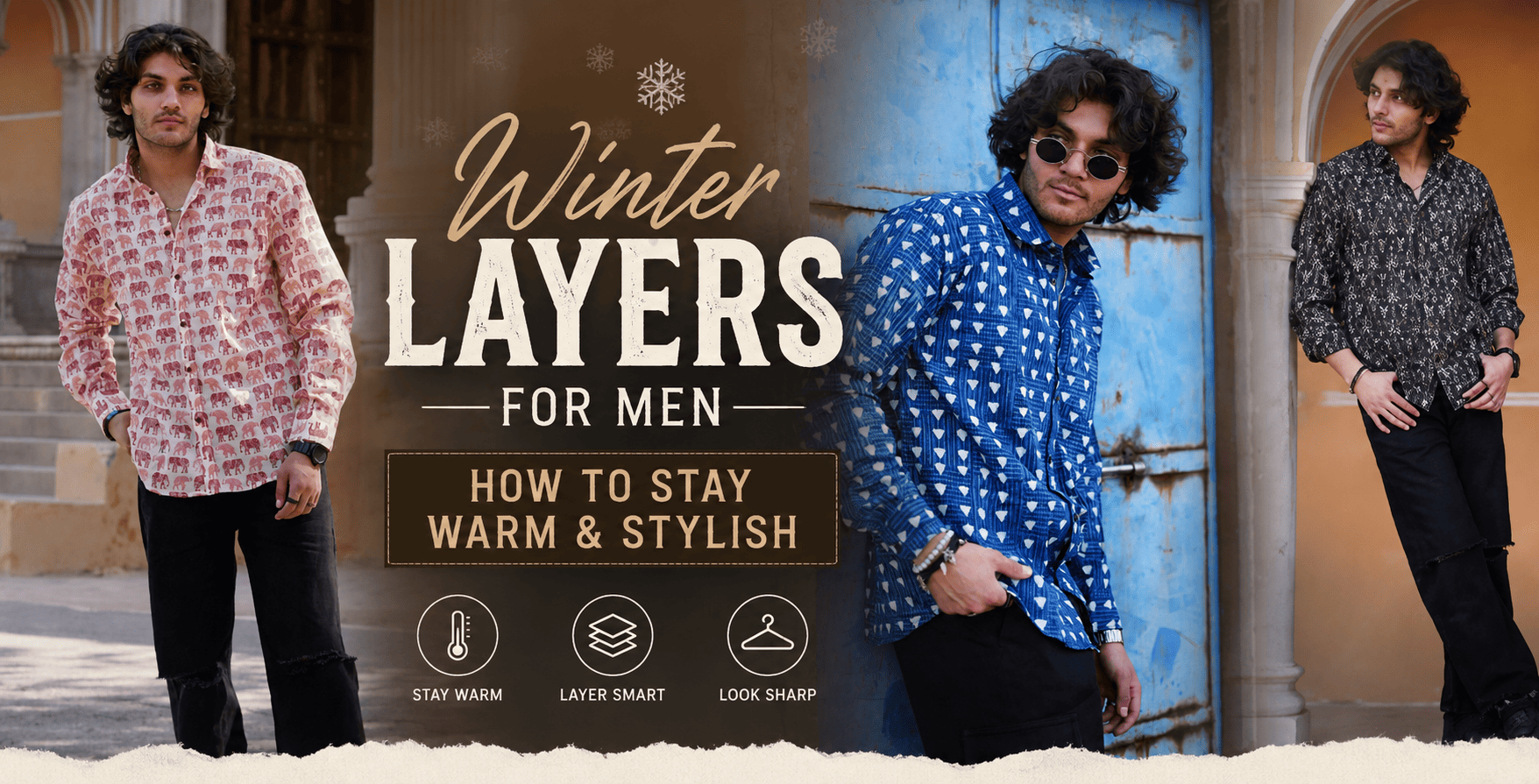
Winter dressing can be surprisingly tricky.
Wear too little and you’re freezing.
Wear too much and you feel like you’re carrying your entire wardrobe on your shoulders.
The solution is layering.
Good layering isn’t about piling on as many clothes as possible. It’s about combining a few pieces so each layer has a purpose.
For Indian winters, where temperatures can vary significantly between regions and even between morning and afternoon, layering is particularly useful.
A cold morning may require a jacket, while the afternoon might be warm enough for just a shirt or T-shirt.
Instead of buying a completely separate winter wardrobe, learn how to layer the pieces you already own.
What Is Layering?
Layering means wearing multiple clothing pieces together, with each layer serving a different function.
A basic outfit might look like:
T-shirt → Shirt → Jacket
Or:
T-shirt → Overshirt → Light Jacket
Each layer can be removed as the temperature changes.
That’s the real advantage.
The Three-Layer Method
A simple way to understand winter layering is to think in three levels.
Base Layer
The layer closest to your body.
Usually a T-shirt or lightweight thermal.
Middle Layer
Provides additional warmth.
Examples:
- Shirt
- Overshirt
- Sweater
- Sweatshirt
Outer Layer
Protects you from cold air.
Examples:
- Jacket
- Coat
- Lightweight puffer
You don’t necessarily need all three every day.
Choose based on the weather.
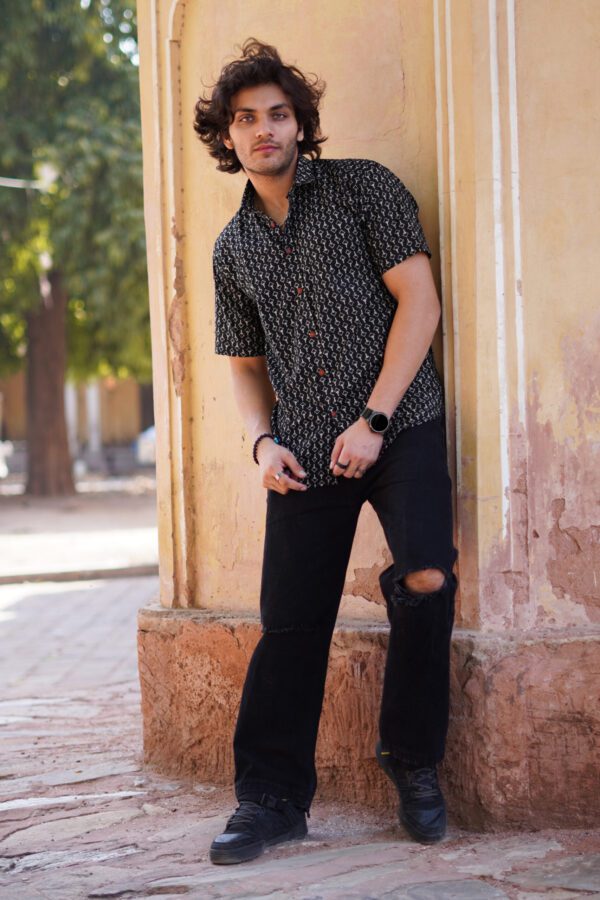
1. T-Shirt + Printed Shirt + Jacket
This is one of the easiest combinations for younger men.
Start with a plain oversized or regular-fit T-shirt.
Add an open printed shirt.
Finish with a lightweight jacket.
The printed shirt becomes a middle layer while adding colour and personality.
It’s particularly good for:
- College
- Café outings
- Weekend plans
- Evening walks
2. Oversized T-Shirt + Denim Jacket
Want something simple?
Wear an oversized T-shirt underneath a denim jacket.
Pair with:
- Straight jeans
- Cargo pants
- Sneakers
This creates an effortless casual look.
Keep the T-shirt slightly visible below the jacket for a layered silhouette.
3. Printed Shirt + Lightweight Jacket
A printed shirt doesn’t need to disappear during winter.
Choose a relatively subtle printed shirt and wear it under a neutral jacket.
Try:
Printed shirt + black jacket + dark jeans
Or:
Printed shirt + beige jacket + blue denim
The contrast between the print and solid outer layer creates visual interest.
4. Oversized Tee + Overshirt
For mild winter weather, you don’t necessarily need a heavy jacket.
An oversized T-shirt underneath an open overshirt can be enough.
Pair it with relaxed trousers or cargo pants.
This is especially useful in cities where winter afternoons aren’t extremely cold.
5. Monochrome Winter Look
If you’re into minimal fashion, try a monochrome palette.
For example:
Black T-shirt + charcoal overshirt + black trousers
Or:
Cream T-shirt + beige overshirt + tan trousers
Different textures keep the outfit interesting even when the colours are similar.
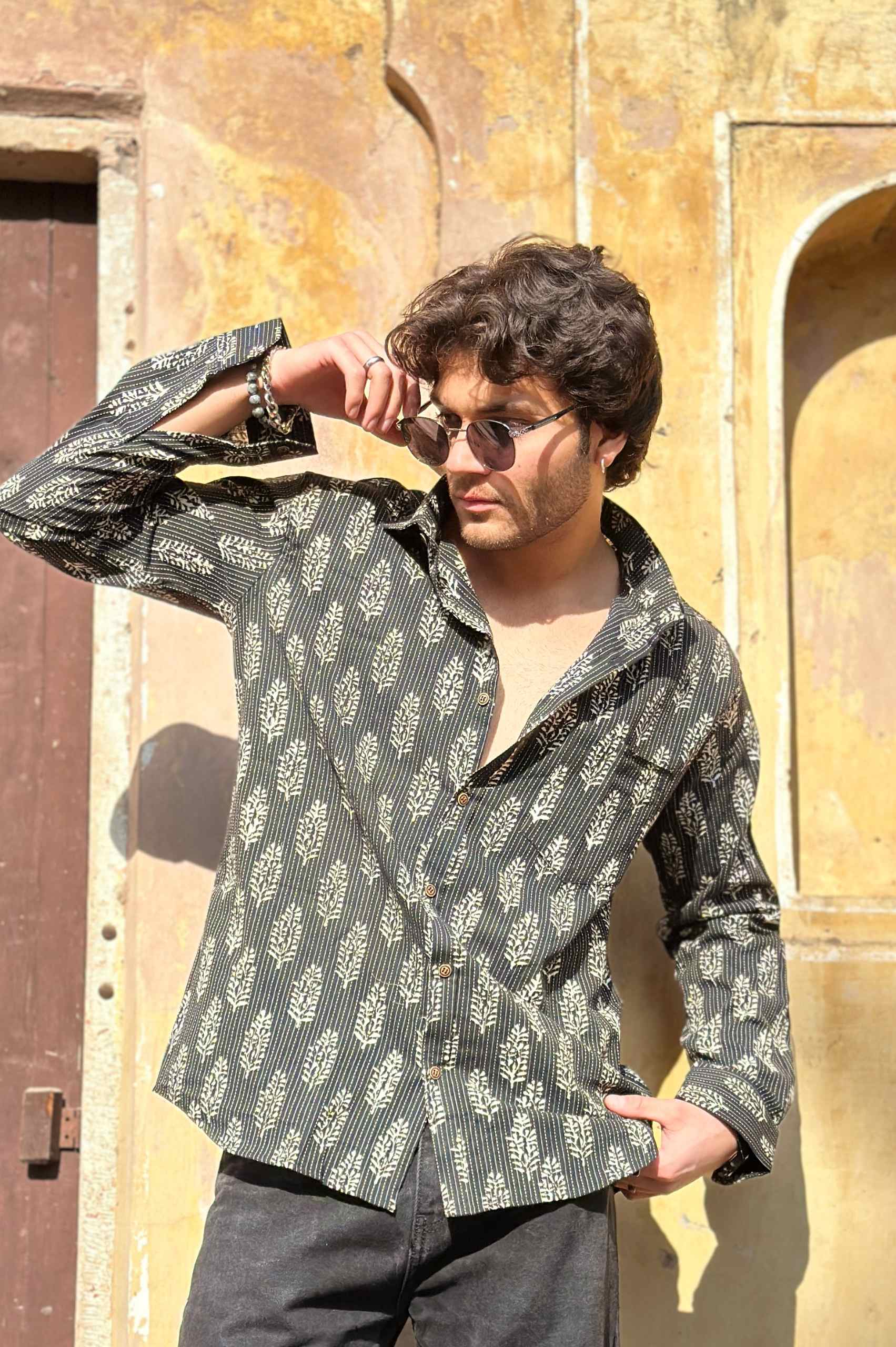
How to Choose Colours for Layering
You don’t need every layer to match.
Instead, create contrast.
Neutral Base
Start with:
- White
- Black
- Grey
- Cream
Then add colour through the middle or outer layer.
For example:
White T-shirt + mustard printed shirt + black jacket
The colour becomes a feature without overwhelming the outfit.
Don’t Make Every Layer Oversized
This is an important styling point.
If your T-shirt is already very oversized, you don’t necessarily need an extremely oversized jacket.
Too much volume can make the entire outfit lose structure.
Instead, create controlled proportions.
For example:
Oversized T-shirt + straight jeans + structured jacket
Or:
Regular T-shirt + relaxed overshirt + relaxed trousers
Winter Styling for Different Occasions
College
Oversized T-shirt + printed shirt + cargo pants + sneakers.
Office Casual
Regular-fit printed shirt + chinos + lightweight jacket + loafers.
Date Night
Dark printed shirt + black trousers + structured jacket.
Weekend
Oversized T-shirt + denim jacket + relaxed jeans.
Travel
Cotton T-shirt + overshirt + cargo pants + comfortable sneakers.

Layering Mistakes to Avoid
Too Many Thick Layers
You don’t need three heavy garments.
Ignoring Proportion
Multiple oversized pieces can overwhelm your frame.
Wearing Only Dark Colours
Winter doesn’t mean everything has to be black.
Forgetting Comfort
You should still be able to move easily.
Wearing the Wrong Fabric
Choose layers appropriate for your local temperature and activity.
Winter Accessories
Accessories can make a simple outfit look much more complete.
Consider:
- Beanie
- Scarf
- Watch
- Sneakers
- Leather boots
- Sunglasses
- Minimal gloves
Don’t add accessories simply because it’s winter.
Choose pieces that fit your outfit.
Building a Small Winter Wardrobe
You don’t need twenty winter pieces.
Start with:
- 2–3 quality T-shirts
- 2 printed shirts
- 1 overshirt
- 1 denim jacket
- 1 lightweight winter jacket
- 2 trousers
- 1 pair of jeans
- 1 versatile sneaker
These can create a surprisingly large number of combinations.

Frequently Asked Questions
1. What should men wear for winter layering?
Start with a comfortable base layer, add a shirt, overshirt or sweater, and finish with a jacket when necessary.
2. Can I wear printed shirts in winter?
Absolutely. Wear them underneath neutral jackets or overshirts to add colour to winter outfits.
3. Can oversized T-shirts be layered?
Yes. They can work well underneath open shirts, overshirts and jackets, provided the overall proportions remain balanced.
4. How many layers should men wear?
There isn’t a fixed number. Use only as many layers as needed for the weather and your activity.
Final Thoughts
Good winter fashion isn’t about wearing the biggest jacket you own.
It’s about knowing how to combine pieces.
A T-shirt can become a base layer.
A printed shirt can add colour.
An overshirt can provide structure.
And a jacket can finish the look while keeping you warm.
Once you understand layering, the same clothes can take you through different temperatures and occasions without making your wardrobe unnecessarily large.